watch out I'm getting all verklempt

Finished copies!

Last night, I got home to a big box on my doorstep. Sent from Sourcebooks c/o RR Donnelly, so I had an inkling what was inside.IMG_2132

(Photo taken after I’d gone inside and grabbed a camera, and almost locked myself out in my excitement.)

IMG_2136

(Please ignore the other boxes in the background. What? You seem to remember that I moved almost a year ago? Uh . . . let’s move on, shall we?)

IMG_2152

What was inside was pretty freaking exciting.

IMG_2142

And it made for a pretty awesome night.

IMG_2153

Cover Reveal!

That’s right, When Audrey Met Alice has a cover!

You can head over to Mundie Kids and check it out. We’re also sharing the ARC cover and details about the process behind creating the perfect cover for Audrey and Alice’s story.

Here’s the link: http://mundiekids.blogspot.com/2013/10/when-audrey-met-alice-by-rebecca.html

Elizabeth Connor, the incredibly talented designer, and the whole Sourcebooks team created what I think is the perfect image for this story. It’s an understatement to say that I’m thrilled with it.

Thanks to Katie at Mundie Kids for her help and enthusiasm with my reveal! It’s so fun to get to share this.

Bookanista Rec: Wonder

It’s time for another Bookanista recommendation: R. J. Palacio’s Wonder.

Here’s the summary from Goodreads:

August (Auggie) Pullman
was born with a facial deformity that prevented him from going to a
mainstream school—until now. He’s about to start 5th grade at Beecher
Prep, and if you’ve ever been the new kid then you know how hard that
can be. The thing is Auggie’s just an ordinary kid, with an
extraordinary face. But can he convince his new classmates that he’s
just like them, despite appearances?

R. J. Palacio has written a
spare, warm, uplifting story that will have readers laughing one minute
and wiping away tears the next. With wonderfully realistic family
interactions (flawed, but loving), lively school scenes, and short
chapters, Wonder is accessible to readers of all levels.

I have to admit that I put off reading Wonder, even though I’d heard such wonderful things about it. I worried that it might be too painful to read about some of the things that happen to Auggie, especially if I loved his character as much as I suspected I would. I got even more
fearful that this would be a tough read when I started reading and
immediately fell in love with Auggie’s sweet MG voice. I read it in a day.


And reading Wonder was sometimes painful–set the book down, close your eyes, and take a deep breath before continuing to read painful–but that, if anything, only enhanced the reading experience. Wonder‘s central message–choose kindness–is important for readers of all ages to hear. The multiple POV structure really builds on that message by creating so much empathy for all of the characters. This is a book that contains moments of heart-crushing sadness and disappointment, but many more of uplifting love and courage.

See what my fellow Bookanistas are recommending today:


Shari Arnold has chills for BY BLOOD, by Tracy E. Banghart
Christine Fonseca has all the feels for DARKEST MERCY, by Melissa Marr
Nikki Katz is gushing about BLYTHEWOOD, by Carol Goodman
Stasia Ward Kehoe has taken a shine to GOLDEN, by Jessi Kirby
Jessica Love has fond memories of ALL OUR YESTERDAYS, by Cristin Terrill

Lenore Appelhans swoons for THESE BROKEN STARS by Amie Kaufman & Meagan Spooner

On Patience and the Bottle in my Fridge

Many moons ago, someone gave me a bottle of decent champagne. I think it might have been leftover from a holiday party. I didn’t have an occasion to open it at the time, and I’m not generally fabulous enough to pop a bottle of bubbly for no reason. It was around the time I first went on submission for the first time ever, so I thought, “I’ll save this for the day I accept an offer for my book.” (Which I realize now is a slightly obnoxious but not uncommon thought pattern for newbies on sub.)

The champagne sat in the way-back of my fridge. And it sat. It sat for so long that I started Googling things like, “Does champagne go bad?”
Oh, there were times when it looked like I’d be opening it. I’d open the fridge door to get some carrots and smile at the bottle. Soon, soon. Maybe I’d pull the champagne flutes out of storage and rinse off the dust, you know, just in case.
HUBRIS ALERT. The occasion to take out the bottle never materialized, despite coming painfully close to fruition.

On some days, that green bottle mocked me from its perch on the shelf. I stuck the Brita pitcher in front of it to hide it. My husband found it one day. “Did you know that there is a bottle of champagne in the fridge? What’s that doing there?”
“Nothing.” Saving that champagne was a stupid idea, I thought. The bottle is going to sit in there forever. I’ll be packing it up for every move. Each December, I’ll debate yanking it out for New Year’s just to get rid of it. If I ever have children and then someday they have to move me into a nursing home, they’ll find it and ask, “Mom, why is there a bottle of champagne from 20– in here?” But I kept it in there anyway. Because part of me always believed that I would, in fact, have the occasion to open it someday.

That bottle became a random symbol of determination, of the hope and optimism a writer needs when working on another round of revision or a fresh first draft. Maybe someday people will read these words I’m writing. If I really REALLY work hard, if I’m patient, and if I’m just a little bit lucky. When that happens, I will celebrate. I will pop that champagne, finally.

You probably know where I’m going with this. That heavy, green, EMPTY champagne bottle went out with last week’s recyclables. The cork is sitting on my desk. Dreams do come true, hard work is rewarded. Patience pays off, and so does optimism. And this is why it’s good to never give up.

One-Word Wednesday

“Gratitude and Rust” by Shannon Kringen (CC)

Thanks for all of the kind words yesterday! I’m overwhelmed in the best possible way with the support and enthusiasm of the writing community. 🙂

(Borrowing this meme today from Katy Upperman)

Some Good News

From Publisher’s Marketplace today:


Click to read, or see below:


Rebecca Behrens’s debut WHEN AUDREY MET ALICE, featuring the thirteen-year-old First Daughter who finds Alice Roosevelt’s secret diary hidden beneath the floorboards of the White House and is inspired to “eat up the world” though one wrong step could mean tabloid scandal, to Aubrey Poole at Sourcebooks, by Suzie Townsend at New Leaf Literary & Media (World English).

Dude! My book is being published! It’s definitely surreal to write this post announcing my good news. The closest approximation to how I feel right now is this. I’m thrilled that When Audrey Meets Alice will be in print! I’m so excited to be working with Aubrey Poole and the rest of the Sourcebooks team. And I’m incredibly thankful to the amazing Suzie Townsend for being such a great advocate for my writing and finding a home for my book.

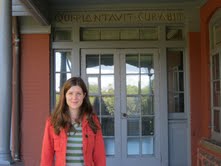
I’ll leave you with a slightly dorky picture of me at Alice Roosevelt’s childhood home, Sagamore Hill. I already had a visit planned for the weekend after I found out this great news, which was serendipitous and awesome. Happiest day trip ever! I don’t think I’ve stopped smiling since I got the call. 🙂

July in Pictures

How I spent last month: living out of a suitcase.* I made it through 9 flights and 26 hours in the air! I currently have no idea what time zone my body thinks I’m in, but I can assure you that it’s not EST.

All that travel was so worth it:

I made friends with sea turtles.

And relaxed poolside.

Saw waterfalls.

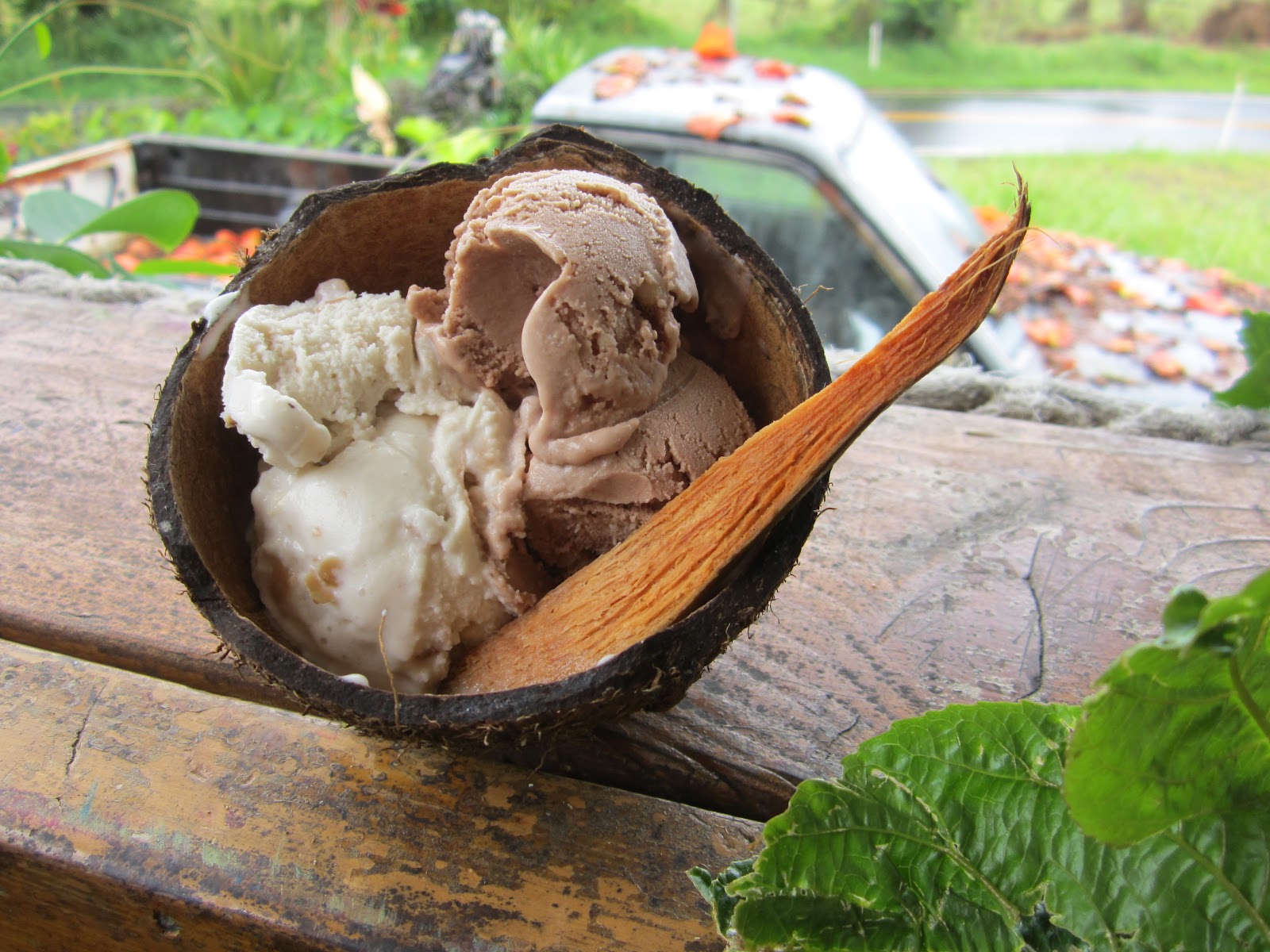
Ate coconut everything.

Went to lots of beaches.

Saw lots of sunsets.

 But most importantly:

It was my best month, well, ever.

I’ll be back to semi-regular Internetting next week (thanks to all those flights, I have plenty of books to talk about).

What have you been up to? What awesomeness have I missed in the blogosphere?


*Actually three suitcases, and by the second half of the trip it had evolved to those three plus one hefty tote bag masquerading as personal item. I do not pack light.

Where we buy our books

I don’t care where people buy their books–indies or B&N or Half Price or online or Urban Outfitters or Target or the airport or your neighbor’s stoop–I just like it when people buy books. Yay, books!
With one exception: buy it where you found it.

If you discover a book in a bookstore, buy it there.

There have been a lot of trend pieces lately (and this article) about people using bookshops as showrooms–browsing the display tables and staff picks, then jotting down or taking pics of the titles to remember to buy them from an online retailer. I say: that sucks! Somebody working at that bookstore decided to stock the book, and liked it enough to put it out for you to find it. If you wouldn’t have known or thought to order it online without seeing it in the brick & mortar store, that store (and its helpful curators, the employees) deserves for you to buy the book there. Even if it costs a dollar or several more than online.
By the same measure: if you discover a title from an online giant’s email or newsletter or algorithm, great! Go ahead and buy it from them.

But a store is a store, not a showroom. It’s there to sell things and if it doesn’t, it will go away. Now that we have online retailers with no physical presence and mobile shopping apps up the wazoo, we have to protect the brick & mortar stores that help make our towns and neighborhoods vibrant places. Unless, of course, you want all the businesses around you to be banks and cell-phone stores. Nothing against them, but personally, I’d prefer a few bookshops in the mix.

Why we need to teach fiction

I’m pretty familiar with the Common Core standards, at least the English Language Arts ones, thanks to my day job. [Warning: I will now dabble in curriculum babble for approximately 4 sentences. And then I will stop.] Overall, I think it’s a good idea to standardize across the country what’s taught at certain grade levels and to make sure that really important reading and mathematics skills are covered. One thing that really bugs me about the Common Core, though, is that the standards de-emphasize reading fiction in favor of reading informational texts and nonfiction. The rationale is that reading informational texts better prepares kids for future testing and future employment. Fiction-reading skills aren’t seen as essential to compete in the academic and business world. Fiction is treated kinda like leisure reading, and nonessential. Not that there’s anything wrong with leisure reading–but fiction is so much more than that.

Julia Steiny wrote an essay for the Providence Journal about this issue and shared her thoughts on why fiction holds as many real-life benefits for students–read her essay here. She makes some great points, like the reason why her teachers all taught classical fiction in their classrooms:

[T]heir most compelling reason to hike around fictional landscapes was to build wisdom. Really smart people absorbed a lot of worldly experience from literature, well beyond what anyone could acquire in a single human life. Fiction can take us anywhere, to any time, and help us sense how it might feel to be a different sex, race or nationality. And these experiences would prepare us for the slings and arrows of our own uncertain futures. 

TRUE!

Steiny’s article made me think about what reading (not to mention writing) fiction has taught me:

Fiction made me love history.
Fiction made me a more empathetic and less judgmental person.
Fiction taught me the value of humor, and made me appreciate irony. 
Fiction educated me on how other people live in this country and around the world.
Fiction prepared me for tough circumstances I hadn’t yet experienced.
And fiction has helped me support others in their difficult times.
Fiction helped me embrace my imperfections and celebrate what made me unique as a teen.
Fiction taught me about resilience and that a dream unachieved isn’t as sad as a dream abandoned.
Fiction has helped me make choices about the kind of life I lead and the person I want to be.
Fiction fueled my imagination and made me more creative.

What has fiction taught you?

Archives