To say 2020 has been a challenging year for us all is definitely an understatement. So I was thrilled to have the opportunity to write an article for Karen Jensen’s SLJ blog, Teen Librarian Toolbox, about resilience–one of the themes of my latest MG novel, Alone in the Woods:
Check it out to learn more about real-life sisters who survived being lost in the woods, as well as tips to encourage resilience, preparation, and community engagement in your own family!
The Disaster Days may be fiction, but natural disasters–like the major earthquake Hannah, Zoe, and Oscar experience–are sadly real. Young readers might have a lot of questions, and some concerns, after reading their story, so I’ve put together a few resources for parents and educators to help them discuss the book with kid readers. You can find (and download) them all on the book’s Resources page, and here’s a description of each:
The Disaster Days Educator Guide: This comprehensive educator’s guide, aligned to the CCSS for grades 4-7, has prereading information, comprehension questions, comprehension activities, and enrichment activities, as well as a list of resources.
The Disaster Days Discussion Guide: This two-page discussion guide is great for small groups and book clubs! It contains some background information about the book, followed by 10 conversation-sparking questions.
The Disaster Days Family Discussion Card: This postcard is a handy “cheat sheet” for grownups who want to talk about what their young reader is reading. One side has a summary about what the story is about; the other side has a few questions to spark a conversation before, during, and after reading the book and also to connect to current events. If you’d like a print copy of this card, contact me!
I love talking about writing about as much as I love writing (so, a lot). And I had a great time talking about historical fiction and the writing life with one of my “Write Nite” pals (and directly-across-the-street neighbor) Gabriela Pereira. We get into:
How to weave a famous historical figure into fiction
Crafting rich supporting characters in a road trip story (when they only get a scene or two)
Why it’s important to represent real people accurately in your novel
Using setting to develop characters and share history
Check out Episode 215 of diyMFA Radio for our discussion here, and be sure to browse all the wonderful resources on the diyMFA site!
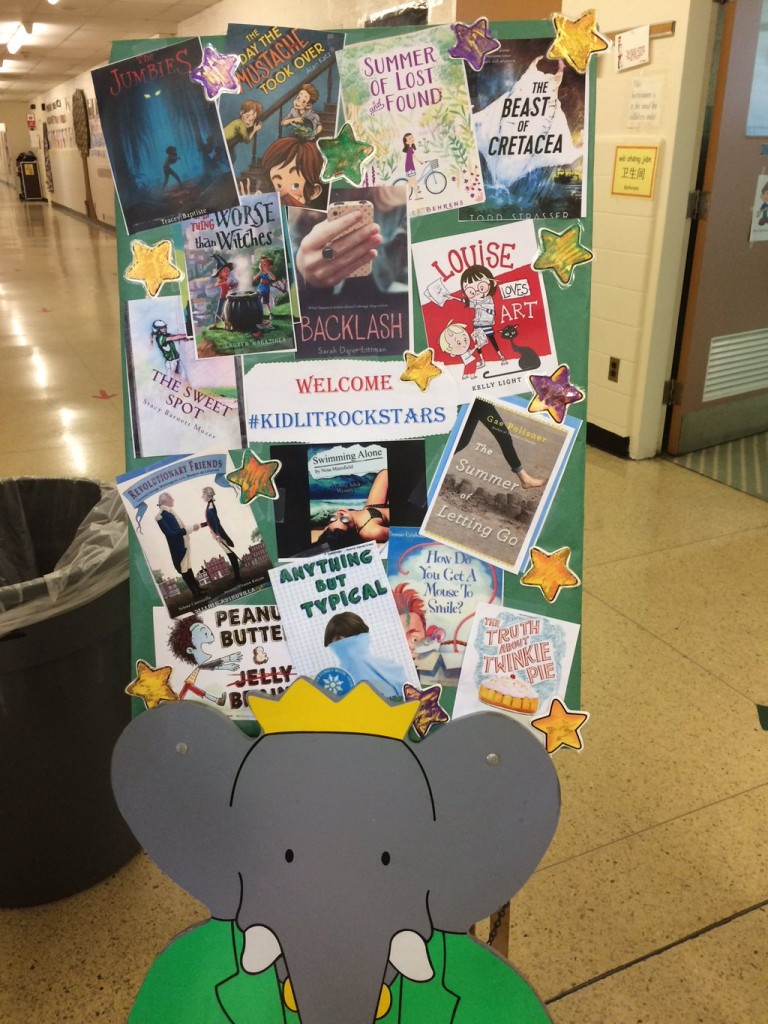
On Saturday, May 21, I got to join a bunch of amazing kidlit authors on Long Island for the inaugural #Kidlitpalooza. And it was a blast.
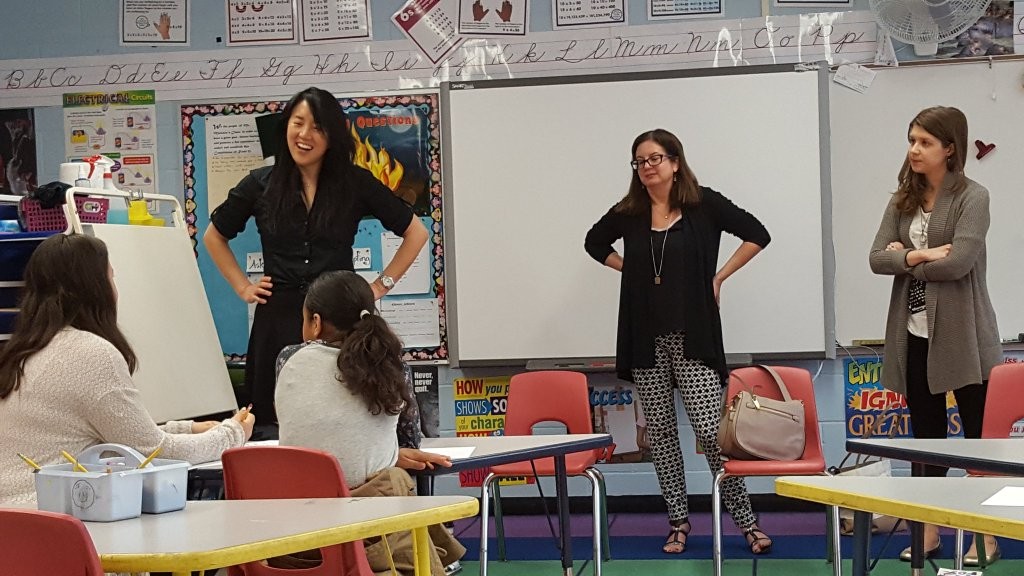
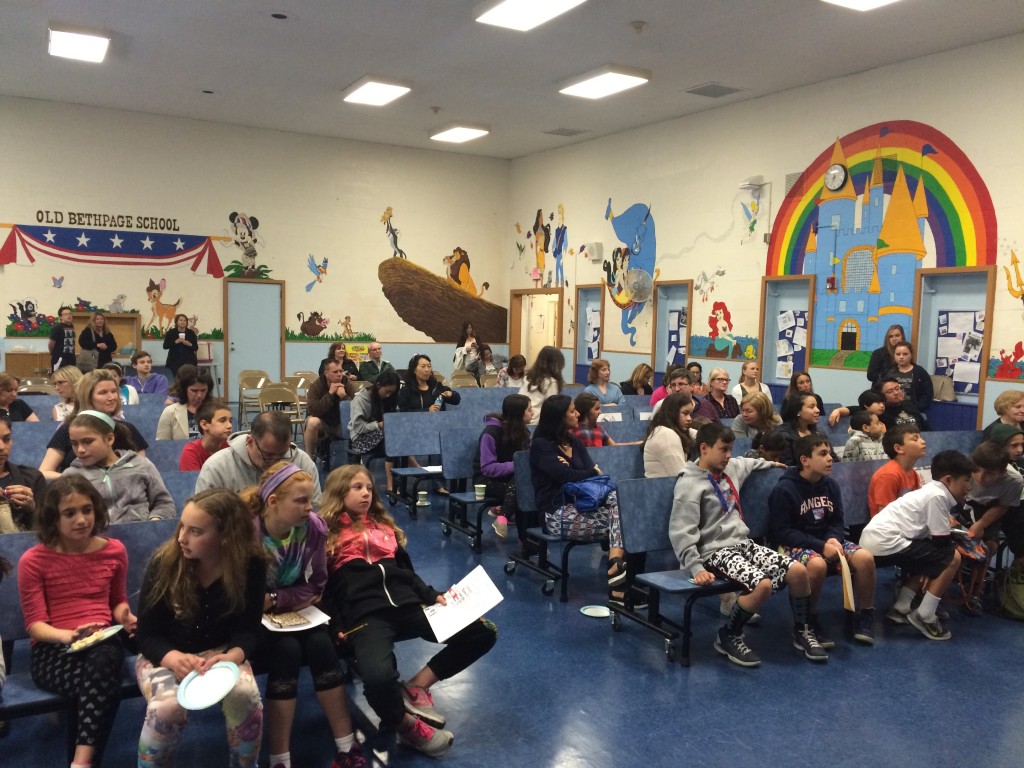
We started out by introducing our books to the fantastic group of kids, parents, and educators, then split off into two breakout sessions. I was part of the Book Love group with Sarah Darer Littman (also an Aladdin author with a new book out in September!) and Kat Yeh (author of The Truth About Twinkie Pie). We had a great time talking about the books we love and how they can help us create great stories of our own. The kids in our sessions were so talented!
The closing ceremonies featured Gae Polisner‘s super fun 60-second reads: one of the first 60 seconds of our titles, and one of our favorite 60 seconds. I almost made it through my favorite 60 seconds, but I got dinged out by the bell with one sentence left. I’ll keep practicing!
It was a really fun day of learning and book love. If you want the full story–check out Two Writing Teachers’ blog for a Live from #Kidlitpalooza post.
So last week my laptop bit the dust. It wasn’t totally unexpected–it was 7 years old(!) and had been acting funny for a while, so I knew its time was almost up. I shifted from backing up my work regularly to backing up my work obsessively, which was good because ultimately my laptop’s death did take me by surprise.
Now I am getting used to a shiny new MacBook Pro and having to relearn How to Computer because a lot has changed since 2007/8.
It’s bittersweet to say good-bye to the sturdy white laptop that I wrote my first manuscript on–in fact, all of the five I’ve written were on that Mac. It’s the end of an era. I’m starting a new project now, and it feels a little weird to be typing on a new keyboard. A new backlit keyboard which is both weird and cool.
On my old computer, a scrap of paper taped to the top right corner, right above the display, read: OMNIA QUAE CUPIO IAM HABEO. “Everything I want, I already have.” I stuck that on while I was in grad school and struggling to properly learn Latin for my final exams. I was so, so frustrated that I couldn’t just master that language and move on with my life. The antsiness ate at me. But when I read that line, and it resonated with me. In terms of all the truly important stuff–my (then boyfriend, now) husband, family, friends, health, and home–I didn’t want for anything. I’d read that line to myself, take a deep breath, and get back to work with a little less angst and a smidge of gratitude.
Eventually I finished grad school, and started writing with the goal of publication. And the OMNIA QUAE CUPIO IAM HABEO line had great meaning for me once again. There was a lot of waiting, and wondering, and wistfulness in the years that I worked to get a book deal. It was very easy to get sucked up in a black hole of want. But again, the important stuff–I had that. Including the joy and satisfaction of devoting part of my life to creativity–regardless of whether my writing ever got to bookshelves. And eventually, it did–something that still feels wondrous.
I’m scraping off that weathered piece of paper and sticking it on my new computer. The “wants” never really go away–they just change depending on what stage of the creative process you’re at. So it’s a reminder I will keep in front of me as I work and write–that, truly, everything I want I already have, and I am so grateful for it.
It’s time for another Bookanista recommendation: (my friend and fellow Bookanista) Jessica Love’s Push Girl.
Here’s the jacket copy from the publisher:
An inspiring, real, and fresh young adult novel about how life can change in an instant [cowritten by Jessica Love and] Chelsie Hill, one of the stars Sundance Channel’s unscripted series Push Girls, based on [Chelsie’s] own life.
Kara is a high school junior who’s loving life. She’s popular, has a great group of friends and an amazing boyfriend, and she’s a shoe-in for homecoming queen. Even though her parents can’t stop fighting and her ex-boyfriend can’t seem to leave her alone, Kara won’t let anything get in the way of her perfect year. It’s Friday night, and Kara arrives at a party, upset after hearing her parents having another one of their awful fights, and sees another girl with her hands all over her boyfriend. Furious, Kara leaves to take a drive, and, as she’s crossing an intersection, a car comes out of nowhere and slams into the driver’s side of Kara’s car.
When Kara wakes up, she has no memory of the night before. Where is she? Why are her parents crying? And, most importantly — why can’t she feel her legs? As Kara is forced to adjust to her new life, where her friends aren’t who they seemed to be and her once-adoring boyfriend is mysteriously absent, she starts to realize that what matters in life isn’t what happens to you — it’s the choices you make and the people you love.
I’ve been telling every YA reader I see about this one, which is both a great contemporary YA novel and a really powerful story of handling adversity with grace, grit, and hope. Kara is a character I won’t soon forget–my heart broke for her many times as I read. I loved how as the story progressed, Kara not only started to rehabilitate physically, but grew emotionally. Her injury brings physical limitations, but the new way she looks at her world and her self brings Kara so much agency. Even before the accident, Kara encounters things in her life that are beyond her control. But it’s only after that she has gained the strength to make healthy choices about how she responds. That’s an important lesson that all teens can relate to: you can’t always control what happens to you in life, but you can control how you respond.
Push Girl is also eye-opening and informative about life with spinal-cord injuries. Reading it, I realized how many incorrect assumptions I had about how people can recover and live independently after sustaining such a traumatic injury. I watched a few episodes of the Sundance Channel show, Push Girls, after reading and I highly recommend it–it’s a really powerful and engaging series.
I think teen readers are going to get so much out of reading this book–a well-written, diverse contemporary story and an invitation to think about how one chooses to live life.
And now I really can’t wait for Jessica’s next YA novel, In Real Life, which will be out in 2015!
Push Girl releases on June 3 from St. Martin’s Griffin.
See what my fellow Bookanistas are recommending today:
I’m pretty familiar with the Common Core standards, at least the English Language Arts ones, thanks to my day job. [Warning: I will now dabble in curriculum babble for approximately 4 sentences. And then I will stop.] Overall, I think it’s a good idea to standardize across the country what’s taught at certain grade levels and to make sure that really important reading and mathematics skills are covered. One thing that really bugs me about the Common Core, though, is that the standards de-emphasize reading fiction in favor of reading informational texts and nonfiction. The rationale is that reading informational texts better prepares kids for future testing and future employment. Fiction-reading skills aren’t seen as essential to compete in the academic and business world. Fiction is treated kinda like leisure reading, and nonessential. Not that there’s anything wrong with leisure reading–but fiction is so much more than that.
Julia Steiny wrote an essay for the Providence Journal about this issue andshared her thoughts on why fiction holds as many real-life benefits for students–read her essay here. She makes some great points, like the reason why her teachers all taught classical fiction in their classrooms:
[T]heir most compelling reason to hike around fictional landscapes was to build wisdom. Really smart people absorbed a lot of worldly experience from literature, well beyond what anyone could acquire in a single human life. Fiction can take us anywhere, to any time, and help us sense how it might feel to be a different sex, race or nationality. And these experiences would prepare us for the slings and arrows of our own uncertain futures.
TRUE!
Steiny’s article made me think about what reading (not to mention writing) fiction has taught me:
Fiction made me love history.
Fiction made me a more empathetic and less judgmental person.
Fiction taught me the value of humor, and made me appreciate irony.
Fiction educated me on how other people live in this country and around the world.
Fiction prepared me for tough circumstances I hadn’t yet experienced.
And fiction has helped me support others in their difficult times.
Fiction helped me embrace my imperfections and celebrate what made me unique as a teen.
Fiction taught me about resilience and that a dream unachieved isn’t as sad as a dream abandoned.
Fiction has helped me make choices about the kind of life I lead and the person I want to be.
Fiction fueled my imagination and made me more creative.