Scents and Writeability

We talk a lot about how some senses contribute to the writing process. The music playlists we listen to as we power through revisions, the pinboards we gaze at to visually inspire our WIPs, the chocolate we savor to help us deal with bad news, even the way our fingers feel tapping the keys (and the way our backs feel after slouching in a desk chair for hours while drafting). But there’s one sense that I feel like gets neglected in discussions of the writing process, and that’s smell.

Smell can be an important and influential part of the writing process. I’ve started incorporating scents into mine, and I swear it’s not related to neglecting laundry so I have more time to write. (I’m a freak who likes doing laundry, actually.) When I sit down to work on the first draft of my WIP, I use the smells of specific candles to get me into the atmosphere of the story. My current favorite? A cedarwood and rosewood blend that I think smells like a barrier island in summer, hot pine needles and driftwood and the Atlantic. Whether the candle objectively does or not smell like that is besides the point; when I burn it while I write, it connects me emotionally to the place I’m traveling on the page.

My current favorite candle.

Not every story is told in a place that smells like flowers, though. I’m not suggesting you make your desk area smell like sulfur if you’re writing about hell. But I do suggest CB I Hate Perfume, which has some fantastically unique scents, like In the Library, a “warm blend of English novel, Russian & Moroccan leather bindings, worn cloth, and a hint of wood polish,” or Walking in Air, which was inspired by Balanchine’s The Nutcracker. (Uh, I think I need At the Beach 1966. I love the smell of Coppertone. Happiness in a bottle.)

Bath and Body Works also has a line of candles out now that includes French baguette and macaron blends, to which I say: I WANT. It’s enough to make me think that the next project I work on needs to involve French bakers, so I can make my writing space smell like bread and cookies all the time.

And then there’s good old Demeter Fragrance Library, which has the normal (almond; mulled cider), the cool (paperback; New Zealand), and the just plain weird (earthworm; dregs, as in the bottom of a wine barrel; and turpentine).

Obviously, you don’t need a delightful or weird potpourri to write. But sometimes a little ritual, like lighting a candle or spritzing a room spray, can help you get into the mood of your story. Or it can help you unwind and let the words flow.

So, have I convinced you to get into aromatherapy for writers?

July in Pictures

How I spent last month: living out of a suitcase.* I made it through 9 flights and 26 hours in the air! I currently have no idea what time zone my body thinks I’m in, but I can assure you that it’s not EST.

All that travel was so worth it:

I made friends with sea turtles.

And relaxed poolside.

Saw waterfalls.

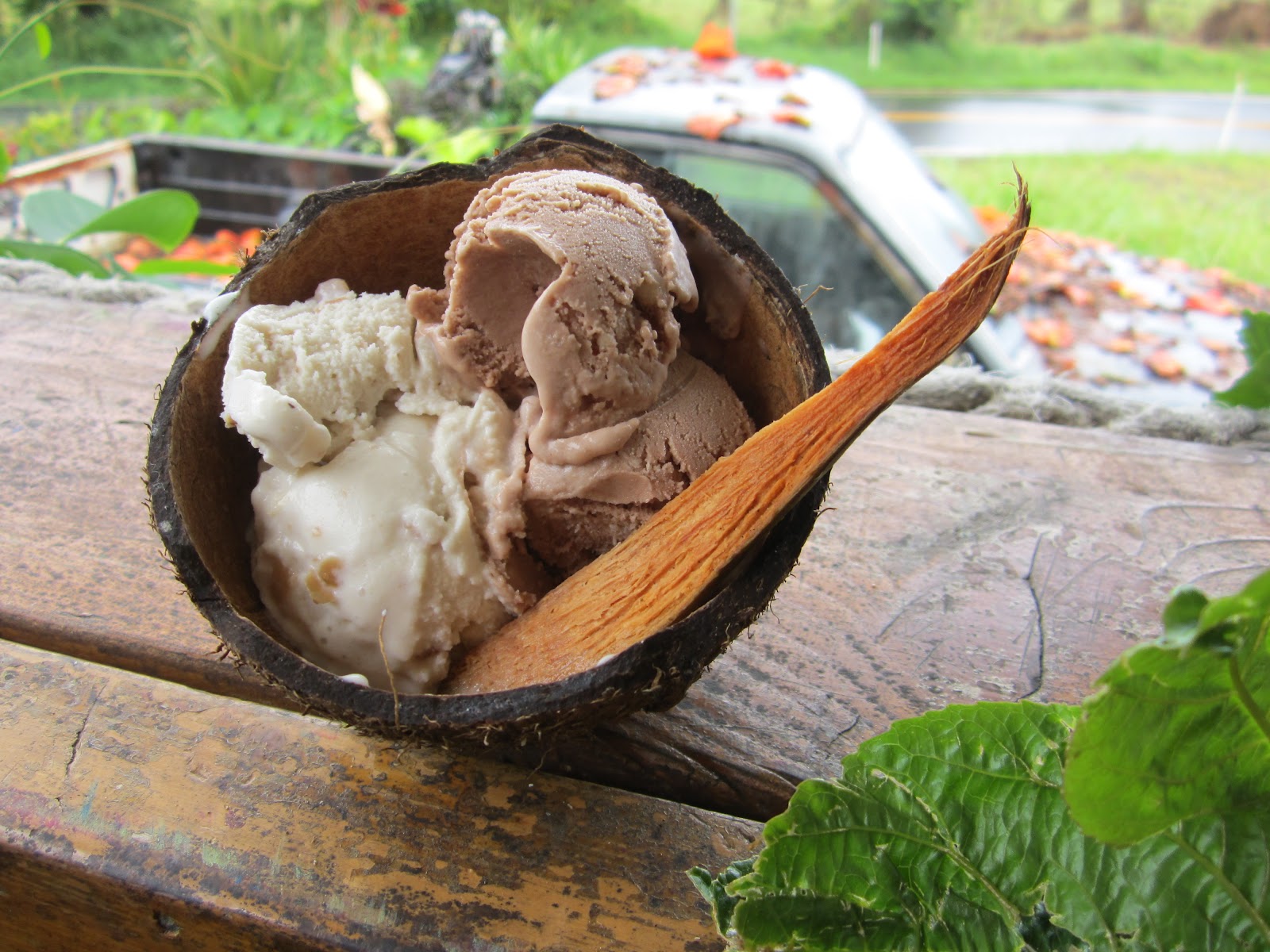
Ate coconut everything.

Went to lots of beaches.

Saw lots of sunsets.

 But most importantly:

It was my best month, well, ever.

I’ll be back to semi-regular Internetting next week (thanks to all those flights, I have plenty of books to talk about).

What have you been up to? What awesomeness have I missed in the blogosphere?


*Actually three suitcases, and by the second half of the trip it had evolved to those three plus one hefty tote bag masquerading as personal item. I do not pack light.

Requiem for a Dumbphone

You served  me well, Dumbphone. Even though you never held a charge. Even though your backplate constantly yearned to break free from the rest of the phone, rendering you unconscious (sometimes in the middle of a call). Even though you loved to butt-dial my sister and BFF Annabel. Even though your teeny tiny little QWERTY keypad made texting a grammatical nightmare.
You had some good features. CNET said your shape was reminiscent of a candy bar; that’s probably why I liked you. Mmm, chocolate phones. You had a distorted little patch of mirror on the back for incredibly lo-res selfies, I guess. Your ringtones were unintentionally hilarious. Or maybe intentionally–I have no idea who designed you. I will miss the fact that I could drop, kick, or throw you without fear. I never, not once, worried about somebody stealing you on the subway.
Perhaps we will meet again–if my iPhone breaks or gets itself stolen, or if I am feeling nostalgic for a phone that is just a phone. Until then: thanks for the four years(!) of conversation. It’s been real.
To all who preceeded me into the world of iPhones: which apps do I want? Help me figure out how to use this thing with suggestions in the comments, please!

BEA: Middle Grade Panel

Thursday was my lucky day, and I got to pop by BEA to spend a couple hours on the floor. I timed it so I could check out a panel: “Writing Strong Female Characters In Middle Grade Books” with Lauren Oliver, Sharon Creech(!),* Judith Viorst, and Shannon Messenger.
Here are some highlights from the panel.**

Which comes first, the world or the character? How does a voice develop?
For Lauren Oliver, character and world develop simultaneously. Specific lines come to her first, which bring the character and worlds together; then she starts exploring it. “The character’s journey is yours, too, as a writer.”
Sharon Creech also finds that world and character develop simultaneously. She strives to stay true to what the character thinks, feels, and speaks. That helps define the world (and voice).
For Judith Viorst, voices lurk “in the location of her belly button.” Writing her Lulu books was the first time that she went from telling a story to her grandkids to turning it into a book.
Shannon Messenger trusts the story: “It tells me where to go.” Her character Sophie came to her before the world of the story did (Keeper of the Lost Cities).

Thoughts on writing middle grade (as opposed to other categories):
All of the authors spoke to the satisfaction of knowing that they are converting/creating readers with their MG books.
LO: Writing middle grade “is like slipping into a blanket.” [I love that sentiment! I think for a lot of lifelong voracious readers, reading/writing middle grade feels like going home.]
SC: Middle grade is the age at which kids fall in love with, or into, books. It’s also an age at which kids are becoming very mature and thoughtful. For a writer–it’s fun to explore those contradictions.

When do you include older characters in a middle-grade story?
SC: She always feels compelled to have older characters and to incorporate what they are thinking.
LO: Sometimes she includes older characters; sometimes she simply has a “mechanism of older wisdom;” it depends on the book.
JV: Likes to include a lot of sibling rivalry.
SM: Is partial to the “cliche of the orphan,” but her characters still have parental figures.

On unlikable characters:
JV: Loves the “hard likes”–characters the reader will eventually come to like, but it’s not easy.
LO: Never felt nor internalized the pressure to be a good girl, so she likes complexity in her characters.
SC: Unlikable, or bad, characters are much more fun to write.
SM: Her “bad boy” character was the most fun to write. She notes that you have to push the reader to see why they should like those characters.

On their writing processes:
LO: The mystery is: what’s this book about. She outlines to some extent, often after she writes 10K so the book starts living.
SC: Has a fluid process. She doesn’t trust an outline [for first drafts] and has to go organically or it is too school-like. After the first draft, she sort-of outlines to look for holes.
JV: The discipline is getting in the chair. She makes herself sit down every day, idea or not.
SM: She makes word count goals, which are sometimes unrealistic. Prefers the “Connect the Dots” method of neither outlining nor pantsing.

*A favorite author from my own middle-grade years, so I was thrilled to see her. I heard Sharon Creech speak about Walk Two Moons and Absolutely Normal Chaos as a tween, and the writing advice she gave in that lecture continues to inspire me!
**Please do not treat as direct quotations as my note-taking was fast and furious.

Archives