talking about writing

November Update

It’s November . . . how? It feels like yesterday that I was heading off to Vegas for ALA, or kicking back with a good book in Central Park. (And I’ve been blogging sparsely enough that if you scroll down, it appears that it was recently that I was doing those things.)

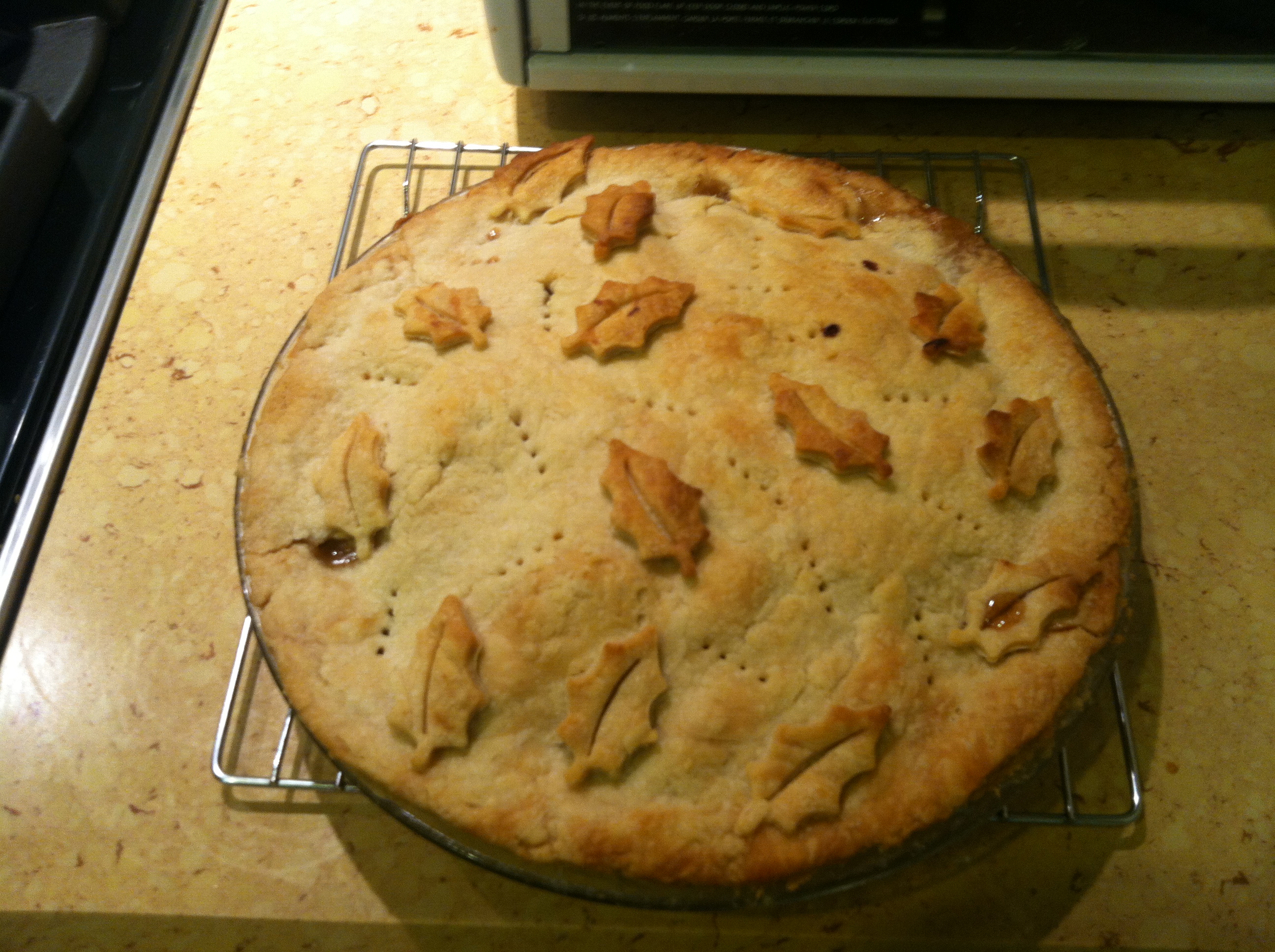
But now the leaves have turned, and my hometown is covered in snow, and my kitchen adventures have shifted from ice cream and grilling to granola and pie-baking.
image

Two weeks ago I was in Wisconsin for the WLA annual conference. Gayle Rosengren and I presented “Making It Real,” a program on using historical fiction in engaging ways to help prepare students for the Common Core. You can find some of our handouts on the WLA conference site here. Sadly, I forgot to take any pictures at the conference! But it was great.

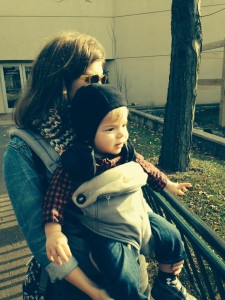
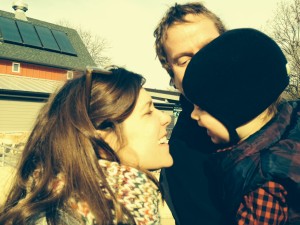
I spent a whole week back, and that included a lot of reading time and family time. My nephew just turned one! We had a lot of fun at the zoo on a chilly day.
10436160_10101126007683395_8192570218397193298_n

image_1

Now I’m back, and ready for some school visits! I’ll be at St. Francis Academy in Union City, NJ, this week and at the Dwight School for their book fair in December. I can’t wait to meet the readers at both!

And, I’m excited to share that I got to blurb a book for the first time! MarcyKate Connolly’s Monstrous is a truly stunning MG (I still think about its fabulous first lines), and it was such a pleasure to get the chance to read it early. Here’s what I had to say:

From its first line, Monstrous had me in its grip. MarcyKate Connolly has created a fresh and wildly inventive dark fairy tale about Kym, a protagonist as sweet as she is strong. Kym’s bravery shines, as she fights against the menacing forces in Bryre and also struggles to figure out where she, a self-described monster of a girl, belongs. This remarkable, absorbing debut will enchant readers.”

And you can read all of MarcyKate’s good news here.

What have you been up to this month?

Writers on Writing

My fellow Sourcebooks author Nancy J. Cavanaugh tagged me in this fun blog-hop tour about the writing process. You can check our her post on writing here! And I’m tagging Jessica Love, whose debut PUSH GIRL releases in June, and the very talented Katy Upperman. Their posts will go up next Monday, May 5.

On with the tour!

What are you currently writing?

I have a few things in the works–all MG projects. One I’m revising (eternally, it sometimes seems) and another for which I’m working on an outline. I’m trying to write a fairly detailed outline, which is not something I have done in the past. Usually, I start drafting with an outline of about 1,500 words–enough to see the overall story, but not individual scenes. This time, I’m trying to figure out the plot a little more before I start. I’m sure the story will change as I write, though–it always does!

What makes your work different?

I am a genre-mixer: I can’t stop combining historical and contemporary fiction. I love exploring the relationship of past and present, and I’m drawn to characters who are the same. In When Audrey Met Alice, contemporary First Daughter Audrey discovers Alice Roosevelt’s wild life through reading a diary, and much like Audrey, I love discovering the complex stories of real historical figures through books. I’m fascinated by famous and historical settings, too–like the White House and the Lost Colony of Roanoke.

I don’t want to generalize too much about historical fiction, but I do think that a lot of books in that genre have a more serious tone. I tend to write slightly humorous voices, which I think is another thing that makes my work unique.

  
Why do you write what you do?

They’re all an answer to the same question, “What book would you have wanted to read ?” Most of my stories start from me thinking about what I was interested in as a middle-grade reader, like First Kids and mysterious disappearances and science and strong, inspiring women.  Especially because I tend to do a lot of research for my books–I better have a healthy interest in what I’m writing about!

What is your writing process?

First, I come up with the concept, which sometimes takes days, weeks, or months of brainstorming and lots of long walks/runs to work out the heart of the story. Then, I write an outline. After I have an outline, I do baseline research–enough that I can work out the plot and characters, but not so much that I get bogged down in details. (Otherwise, I’d never get to drafting–there are too many rabbit holes to fall down!) I write a first draft, slowly. I stop to do more research as needed along the way. Once I have a first draft, I put it away for a while–at least a few weeks. While drafting, I probably realized that I needed to explore certain topics much more in depth–so yes, there is even more research at this point. And then the revising starts–many, many rounds. Whoever said that “writing is editing” was right! The first draft is just a sketch; the shading and color and detail all comes later on, building slowly with each round.

Tell me, what’s your writing process like?


What’s Up Wednesday, 4/2

RobotWhat I’m Reading

I read a ton of books (or what amounts to a “ton” for me) in March: No Surrender Soldier, Let’s Pretend This Never Happened, Leading Man, The Secret Hum of a Daisy, The Ninja Librarians, and Push Girl. Now I’m back to Barbara Kingsolver’s Flight Behavior, which I reluctantly put aside when I was in the middle of a debut-author ARCapalooza.

What I’m Writing

I’m back to revising an old manuscript and doing some research so I can begin outlining a new one. I’d love to be finished with these revisions in the next week or two so I can focus on outlining. In truth, I am itching to get to the drafting stage of this new project. I’m one of those writers who gets caught up in counting new words–sometimes I need to remind myself that reading/researching, outlining, and daydreaming is part of the writing process–and that time “counts,” too.

What Inspires Me Right Now

I am knocking on wood as I type this, but I think it’s finally warming up! Thanks to longer days, I’m loving going home from work while it’s still light out. Hooray, spring. 🙂

What Else I’ve Been Up To

I finally got back to a yoga class, after a few months off due to an injury. It was kind of a bummer to realize how much I still can’t do, but it feels great to know that I’m making progress.

A quick note on an online event I’m doing this week: Booklist Webinars is hosting me and three other New Leaf Literary debut authors for an hour-long presentation on our books and the the debut experience. It’s free, and should be a fun conversation! You can register here: https://alapublishing.webex.com/alapublishing/onstage/g.php?t=a&d=662413562

So what have you been up to lately?

What’s Up Wednesday is a weekly meme that helps readers and writers touch base with blog friends. You can find the link widget (and cute buttons!) on Jaime’s and Erin’s blog posts.

Thanks, and the WAMA blog tour

I had so much fun watching When Audrey Met Alice head off to “eat up the world” this week! Thanks to everyone who congratulated, shared, tweeted, and cheered me, Audrey, and Alice on.

And a huge thanks to the bloggers who’ve generously hosted me on their sites as part of the blog tour. Here are the places you can find me talking about When Audrey Met Alice so far:

Mundie Moms: Interview

A Foodie Bibliophile in Wanderlust: Guest post on where Alice Roosevelt would hang out in DC today

Smack Dab in the Middle: “Middleview” Interview

Musings of a YA Reader: Guest post on who inspired me as a tween

The Compulsive Reader: Guest post on fascinating First Daughters

Books for Kids: Guest post on what Alice would do if she were a First Daughter in the 21st century

Bookshelf Fantasies: Guest post on what Alice would find confusing about the 21st century

Sharp Read: 5,4,3,2,1 Interview

Nerdy Book Club: Guest post “From Reader to Writer”

The Class of 2k14 blog: Book Birthday Interview

Fearless Fifteeners: All Four Kids Interview

Jessica Spotswood’s blog: Thrice Interview (enter the giveaway!)

Heidi Schulz’s blog: In the Middle Interview

Readerly Musings: Guest post on historical women I find fascinating


On NaNo, ten days in

In the past, I’ve used the NaNo energy and camaraderie to write lots–I think last year I did about 30K in November of the project I was working on. But I’ve never done NaNo “for real” before. Truthfully, I’m not even doing that now–I had 28,000 words of the project I’m working on written before the month began. But I did decide that I wanted to NaNo to finish or hit 50K, whichever comes first. And so ever since the clock struck midnight on November 1, I’ve been working for my average of 1,667 words a day, with the 50K goal in mind. (I think finishing this project will take about that many words.)

How’s it going so far? I want to travel back in time and throw a parade for everyone who has finished NaNo in the past because WOW is this hard. When I am drafting, I typically average about 1,000 words a day–but I am not usually able to write every single day. Maybe I do 2,400 on a great Sunday and the following Monday through Wednesday I write nothing. Regardless of how often I write, the 7,000-8,000 words/week average seems to really work for me. At that pace, I’m writing fast enough that my first-draft antsiness isn’t a problem, but not so fast that I get burnt out.

Naively, I thought that upping my average to 1,667 would not be so bad. And while it isn’t terrible–I’m not crying into my pillow every night, and so far I’ve been keeping up with that pace–I’m learning a lot about what makes me a happy writer and a successful drafter, namely: This is too fast for me.* I need a little more time to think things through and to let myself recharge. Of course, there are benefits to the NaNo pace, too–when I hit the middle of my story, I didn’t have the option of muddling in it. I got creative and kept going. The choices I made in forging ahead might have created a hot plot mess, but at least I’m moving forward instead of stalling and starting to second-guess myself, which has been a problem for me in the past.

Because I’m a perfectionist type who loves goals and deadlines, I’m going to keep trying for the 50K goal (also because I want to take December off from writing to read and do holiday things). Even if I don’t make it–and some upcoming travel might derail my plans a bit–I’m proud of how much I’ve already done, and happy with what the NaNo experience is teaching me about my sweet-spot for a writing pace as well showing me how I can use goal-setting to boost creativity.

If you’re doing NaNo, how’s it going? If you’ve done it in the past, how was your experience?

*Duh, right?

Inspiration spots, bubbles, and ideal readers

I have many writing spots, in my apartment, from the desk to the couch to the kitchen table, and writing spots in other places scattered around the city and back in America’s Dairyland, too. But I also have an inspiration spot, one for daydreaming and brainstorming and problem-solving, both for writing problems and sometimes IRL problems.
I wasn’t until I started cultivating my inspiration spot that I realized how important a place–or mental space–that is for writers, too. As important as an ergonomic desk chair.

Anyway, my inspiration spot in a makeshift windowseat. From it I get a nice, sunny view of the sidewalk below my apartment. It makes for good people-watching, as they walk to and from the park or in and out of the candy-and-lotto bodega.

In one of the little walkup buildings on my street lives a nice young family. Their daughter looks like she’s about ten or eleven. Her mom or dad sits on the stoop as she and her puppy play on the sidewalk out front. A lot of times she plays with a simple bubble wand. She twirls around the sidewalk, spinning and marveling at the bubbles floating up into the trees. Her parents join in. It’s really charming. I kind of adore Bubble Girl. (Hopefully it doesn’t sound creepy that I watch her play.)

I write books for young readers, but I don’t have kids. Which is fine, because as that quote from legendary children’s book editor Ursula Nordstrom goes,”I am a former child, and I haven’t forgotten a thing.” But sometimes it’s good to let kids remind me, a little more immediately, of being at the age at which bubbles were all I needed to have a happy afternoon. I smile and watch Bubble Girl play, and I wonder what she’d want to read about. I remind myself that it’s actually her I’m writing for. I’d like to write a book that will make her smile or think or laugh.

Generally, I don’t like to give directives, because really how do I know what anyone else needs to get his or her writing groove on. But I do think it’s helpful for most writers to have a reminder of your ideal reader. Bubble Girl is mine.

And I hope I do right by her.

Revise like an Improviser

Over the years I’ve gotten to learn a little bit about sketch comedy and improv because my husband is a long-time performer. I’m always amazed when I watch his shows at how the spontaneous collaboration works. Whenever someone onstage gets an idea rolling, the other performers embrace and expand it, and more often than not a pretty coherent story blossoms out of something as small as a single word. Considering that as many as half-dozen people are creating the story without actually negotiating the content, that’s impressive. I mean, I sometimes fight too much with myself to get anything on the page.

“Always say yes” is a rule in improv, and it’s a big part of what makes this creativity and collaboration possible. (Tina Fey talked about it in Bossypants and explains how saying yes changed her life here.) At its most basic, the idea applies to how you respond to the other performers within a scene. If you start with the intention that your scene is set in Antarctica, it’s your collaborator’s job to say yes to that idea. Not to think, No–we’re not in Antarctica; we’re at the mall on Black Friday. My idea is better; I’m changing this. No matter how wacked out the idea is, just go with it.

It’s even better to say “Yes, and . . . ” Build on ideas. So your partner places you in a scene in Antarctica, and you respond with “Yes, and we’re here because the plane crashed and now we’re stranded like the guys in the movie Alive.” And your partner might respond with, “Yes, and we would consider cannibalism to survive except we’re part of a group traveling home from a veganism conference.” And so on.

If someone refuses to say yes, things shut down. If someone doesn’t say “yes, and,” it doesn’t build. The same is true for revising.

Whenever you’re revising, and particularly when your revision involves the collaboration of someone else–like a CP, or an agent, or an editor–it’s good to keep an open mind. Approach the work with the mindset of saying yes, and–not with a mindset of no, because. Of course, this is easier said than done–nobody wants to kill his or her darlings, and a lot of times saying no is a reaction to that desire to retain and protect what we’ve worked so hard to create. Saying yes doesn’t mean blindly accepting suggestions, but pushing back out of instinct, or the need to control, instead of for a good reason can be limiting. Adding the “and” can be a way to make sure you take suggestions in a direction that’s right for you. Saying yes, and keeping yourself open to fresh ideas and collaboration, is a way to grow as a writer and a storyteller–and a way to make the revision process more creative.

So, writer friends: do you have a hard time saying yes to changes during revisions? How do you collaborate in the writing process?

On First Daughters and Fandom

Kennedy Family at Camp David (source: Wikimedia Commons)

It’s not surprising that I wound up writing a story about a pair of first daughters; I am a First Kid superfan. My interest in children in the White House has been lifelong–I remember seeing old photographs of the Kennedy children in the Oval Office when I was a kid and being fascinated by them. Same for ones of Amy Carter. Chelsea Clinton is not much older than me, and when President Clinton was in office, I soaked up every tidbit I could (harder to do, in the pre-Internet era) about her tweenage life at 1600.

I also have strong memories of some of the media scrutiny Chelsea faced as a first daughter. There were SNL skits that meanly mocked her, and snide comments from journalists like this tone deaf essay from Frank Rich at the NYT, “The Chelsea Show.” Yes, a grown man publicly called out her “gawkiness, frizzy hair, and orthodontically transitional smile.” It appears he was trying to be sympathetic to Chelsea’s plight in his “humorous” essay, but dude: what an ass.

Margaret Truman Daniel, a former first daughter herself, wrote a famous Letter to the Editor to chastise him. It was part of the reason why the media generally stopped reporting on the children of presidents. (The NYT describes that as an “informal pact” between the press and the White House in their article on how Malia Obama’s spring break trip almost became news. It clarifies that unless the girls are with their parents, they are considered off-limits by much of the media.)

I’ve had a lot of impulses over the past couple of years to blog about the Obama girls, for obvious reasons (they are first kids, and they also seem like very cool kids). I’ve tried to hold back. The thing is, it’s a different situation to write about historical first daughters (those that are now deceased), former first daughters (those who are now adults), and the current two. It’s clear that the information released about the Obama girls is closely guarded, as it should be. Administration officials must work very hard to protect a little privacy for the first family, and that is an admirable thing. Perpetuating public interest in the Obama girls–even simply through linking to photos or articles on other sites on my humble blog–doesn’t seem fair. The smidge of privacy they maintain has been hard-won, and it’s important to respect that.

I hope to start sharing more of the information I’ve learned about life at the White House and famous first kids over the next TK-many months until When Audrey Met Alice comes out. Only the fun stuff, though–I promise not to bore you! But one thing you won’t read about here are the current occupants of 1600 Pennsylvania Avenue, unless it’s a link to or sourced by some kind of official information.

What do you find interesting about First Kids*?

*A nerdy little grammar note: So far as I can tell, it is not grammatically correct to capitalize unofficial titles such as first daughter and first kid. Even First Lady is not an official title, although it is commonly treated as such and therefore capitalization is accepted. Sometimes I do capitalize first daughter or first kid, though, as a stylistic choice to highlight the title. The copy editor part of me is annoyed by this. I should probably start being consistent.

Seeing your Settings

The White House Social Fall Garden Tour was an incredible experience for a lot of reasons: meeting the very cool and accomplished other attendees; hearing White House administration staff and officials speak on a variety of topics; viewing the beautiful gardens; and, you know, getting to explore the White House, or at least its grounds! But it was also a very special day for me because I got to visit one of my settings in person (and it was a setting I thought it would be unlikely for me to ever experience firsthand).

Writing When Audrey Met Alice and revising it (many times), I spent hours researching the White House: poring over every photo I could find; reading books and websites and blogs; watching films and TV shows set and filmed there; studying maps and floor plans. Although I hope the WH I created in my story is authentic, it’s definitely a fictional place. Despite all that research, I still had to make tons of stuff up. Sometimes that was because I just didn’t have access to information and other times it was in the interest of good storytelling.

My brief visit to the White House grounds gave me some of the firsthand knowledge I couldn’t get from my research: How the area smells; what the ambient sounds are like; how open or closed the outdoor spaces feel when you’re in them. I got a taste of the oxymoronic atmosphere: the White House is serene at the same time it’s bustling. There are people everywhere working (administration officials, secret service agents, landscapers and groundskeepers, etc.), but it feels very calm and controlled (at least to a visitor). I witnessed the security procedures for guests, from the info you disclose prior to your visit to the metal detectors to scanning a badge to let you leave.

One of my characters has a joyride in a golf cart at the WH.
I saw the vehicle in this photo and pictured her on it. Awesome!

I also uncovered some details more directly related to my writing about a fictional and a historical first girl. When asked a (pretty benign) question about the habits of Sasha and Malia, the administration staff politely declined to answer–they maintain the privacy of the girls, even when it comes to matters like “do they like eating their vegetables from the garden.” I have to admit that I was really pleased at that response–it’s great that the WH staff are so protective of the rightful privacy of first kids! (I know my characters would have appreciated that.)

Some settings are easier to visit than others and some downright impossible–a fictional planet, the 16th century, the inside of a volcano. But whenever possible, it’s important to visit the places that inspire our stories. Not only for the authenticity it can give one’s writing, but for the way it can energize and reinvigorate. Looking ahead to edits on my book, I can’t wait to incorporate some of what I experienced last Friday into the book. I’ve totally reconnected with my setting, and that’s a wonderful thing.

On Patience and the Bottle in my Fridge

Many moons ago, someone gave me a bottle of decent champagne. I think it might have been leftover from a holiday party. I didn’t have an occasion to open it at the time, and I’m not generally fabulous enough to pop a bottle of bubbly for no reason. It was around the time I first went on submission for the first time ever, so I thought, “I’ll save this for the day I accept an offer for my book.” (Which I realize now is a slightly obnoxious but not uncommon thought pattern for newbies on sub.)

The champagne sat in the way-back of my fridge. And it sat. It sat for so long that I started Googling things like, “Does champagne go bad?”
Oh, there were times when it looked like I’d be opening it. I’d open the fridge door to get some carrots and smile at the bottle. Soon, soon. Maybe I’d pull the champagne flutes out of storage and rinse off the dust, you know, just in case.
HUBRIS ALERT. The occasion to take out the bottle never materialized, despite coming painfully close to fruition.

On some days, that green bottle mocked me from its perch on the shelf. I stuck the Brita pitcher in front of it to hide it. My husband found it one day. “Did you know that there is a bottle of champagne in the fridge? What’s that doing there?”
“Nothing.” Saving that champagne was a stupid idea, I thought. The bottle is going to sit in there forever. I’ll be packing it up for every move. Each December, I’ll debate yanking it out for New Year’s just to get rid of it. If I ever have children and then someday they have to move me into a nursing home, they’ll find it and ask, “Mom, why is there a bottle of champagne from 20– in here?” But I kept it in there anyway. Because part of me always believed that I would, in fact, have the occasion to open it someday.

That bottle became a random symbol of determination, of the hope and optimism a writer needs when working on another round of revision or a fresh first draft. Maybe someday people will read these words I’m writing. If I really REALLY work hard, if I’m patient, and if I’m just a little bit lucky. When that happens, I will celebrate. I will pop that champagne, finally.

You probably know where I’m going with this. That heavy, green, EMPTY champagne bottle went out with last week’s recyclables. The cork is sitting on my desk. Dreams do come true, hard work is rewarded. Patience pays off, and so does optimism. And this is why it’s good to never give up.

Scents and Writeability

We talk a lot about how some senses contribute to the writing process. The music playlists we listen to as we power through revisions, the pinboards we gaze at to visually inspire our WIPs, the chocolate we savor to help us deal with bad news, even the way our fingers feel tapping the keys (and the way our backs feel after slouching in a desk chair for hours while drafting). But there’s one sense that I feel like gets neglected in discussions of the writing process, and that’s smell.

Smell can be an important and influential part of the writing process. I’ve started incorporating scents into mine, and I swear it’s not related to neglecting laundry so I have more time to write. (I’m a freak who likes doing laundry, actually.) When I sit down to work on the first draft of my WIP, I use the smells of specific candles to get me into the atmosphere of the story. My current favorite? A cedarwood and rosewood blend that I think smells like a barrier island in summer, hot pine needles and driftwood and the Atlantic. Whether the candle objectively does or not smell like that is besides the point; when I burn it while I write, it connects me emotionally to the place I’m traveling on the page.

My current favorite candle.

Not every story is told in a place that smells like flowers, though. I’m not suggesting you make your desk area smell like sulfur if you’re writing about hell. But I do suggest CB I Hate Perfume, which has some fantastically unique scents, like In the Library, a “warm blend of English novel, Russian & Moroccan leather bindings, worn cloth, and a hint of wood polish,” or Walking in Air, which was inspired by Balanchine’s The Nutcracker. (Uh, I think I need At the Beach 1966. I love the smell of Coppertone. Happiness in a bottle.)

Bath and Body Works also has a line of candles out now that includes French baguette and macaron blends, to which I say: I WANT. It’s enough to make me think that the next project I work on needs to involve French bakers, so I can make my writing space smell like bread and cookies all the time.

And then there’s good old Demeter Fragrance Library, which has the normal (almond; mulled cider), the cool (paperback; New Zealand), and the just plain weird (earthworm; dregs, as in the bottom of a wine barrel; and turpentine).

Obviously, you don’t need a delightful or weird potpourri to write. But sometimes a little ritual, like lighting a candle or spritzing a room spray, can help you get into the mood of your story. Or it can help you unwind and let the words flow.

So, have I convinced you to get into aromatherapy for writers?

BEA: Middle Grade Panel

Thursday was my lucky day, and I got to pop by BEA to spend a couple hours on the floor. I timed it so I could check out a panel: “Writing Strong Female Characters In Middle Grade Books” with Lauren Oliver, Sharon Creech(!),* Judith Viorst, and Shannon Messenger.
Here are some highlights from the panel.**

Which comes first, the world or the character? How does a voice develop?
For Lauren Oliver, character and world develop simultaneously. Specific lines come to her first, which bring the character and worlds together; then she starts exploring it. “The character’s journey is yours, too, as a writer.”
Sharon Creech also finds that world and character develop simultaneously. She strives to stay true to what the character thinks, feels, and speaks. That helps define the world (and voice).
For Judith Viorst, voices lurk “in the location of her belly button.” Writing her Lulu books was the first time that she went from telling a story to her grandkids to turning it into a book.
Shannon Messenger trusts the story: “It tells me where to go.” Her character Sophie came to her before the world of the story did (Keeper of the Lost Cities).

Thoughts on writing middle grade (as opposed to other categories):
All of the authors spoke to the satisfaction of knowing that they are converting/creating readers with their MG books.
LO: Writing middle grade “is like slipping into a blanket.” [I love that sentiment! I think for a lot of lifelong voracious readers, reading/writing middle grade feels like going home.]
SC: Middle grade is the age at which kids fall in love with, or into, books. It’s also an age at which kids are becoming very mature and thoughtful. For a writer–it’s fun to explore those contradictions.

When do you include older characters in a middle-grade story?
SC: She always feels compelled to have older characters and to incorporate what they are thinking.
LO: Sometimes she includes older characters; sometimes she simply has a “mechanism of older wisdom;” it depends on the book.
JV: Likes to include a lot of sibling rivalry.
SM: Is partial to the “cliche of the orphan,” but her characters still have parental figures.

On unlikable characters:
JV: Loves the “hard likes”–characters the reader will eventually come to like, but it’s not easy.
LO: Never felt nor internalized the pressure to be a good girl, so she likes complexity in her characters.
SC: Unlikable, or bad, characters are much more fun to write.
SM: Her “bad boy” character was the most fun to write. She notes that you have to push the reader to see why they should like those characters.

On their writing processes:
LO: The mystery is: what’s this book about. She outlines to some extent, often after she writes 10K so the book starts living.
SC: Has a fluid process. She doesn’t trust an outline [for first drafts] and has to go organically or it is too school-like. After the first draft, she sort-of outlines to look for holes.
JV: The discipline is getting in the chair. She makes herself sit down every day, idea or not.
SM: She makes word count goals, which are sometimes unrealistic. Prefers the “Connect the Dots” method of neither outlining nor pantsing.

*A favorite author from my own middle-grade years, so I was thrilled to see her. I heard Sharon Creech speak about Walk Two Moons and Absolutely Normal Chaos as a tween, and the writing advice she gave in that lecture continues to inspire me!
**Please do not treat as direct quotations as my note-taking was fast and furious.

Archives