busting up rocks

Ants and Grasshoppers

Usually, I’m an ant. I like having to-do lists and schedules, deadlines and goals, and I’m at my happiest when I’m working as much as playing, or maybe even a little more.

But not in August. As the fable goes, there’s a time for work and a time for play, and August is the time for play. The days are still long, most emails are met with out-of-office replies, and the late-summer heat is so perfect for strolling. Or lounging. Or swimming. Or reading. Or ice-cream-cone-licking. But not for typing. (I once had a wooden desk chair and an apartment without air-conditioning, and while I was stuck at my computer revising a book during a heat wave, I hydroplaned off my seat. True story.)

I feel a little guilty being a grasshopper right now. I’m looking forward to being an ant again, in just a few weeks. But for now, I’m going to embrace the season of play. I’ll be “making music” till Labor Day. After all, what a writer needs most is rich experiences, so in my own way I’m storing up food for winter.

(To see my grasshopper days, find me on Instagram!)
 

October Update

It’s October! How did that happen? And, more importantly, what am I going to be for Halloween?!

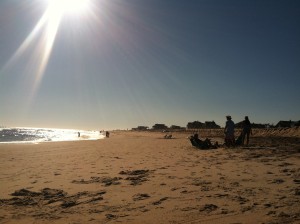
September was a busy month, but I still managed to sneak in a late-season beach day (and I have the Fire Island mosquito bites to prove it).

photo

I also read seven(!) books and wrote 15,000 words of my new project. Oh, and changed day jobs.

Now I’m still writing, anticipating edits for Summer of Lost & Found, and getting ready for some upcoming When Audrey Met Alice events. On October 20, I’m doing a panel with four fantastic MG authors—Tara Dairman, Lauren Magaziner, Laura Marx Fitzgerald, and Michelle Schusterman—at the Voracious Reader in Larchmont, NY. Later that week, I’m teaching a writing workshop for young readers at the New York Society Library. And I’m working on my school-visit presentations for some upcoming visits, too! (Check out my Events page for the details, if you’d like to know more!)

I’m also following a lot of FiDo-related news, good and not as good: the scary security breaches at the White House (although kudos to the off-duty officer on the First Daughters’ detail for stopping an intruder) and the happy arrival of former First Daughter Chelsea Clinton’ new baby, Charlotte. And, of course, I’m slowly making my way through The Roosevelts, the excellent 14-hour Roosevelt documentary on PBS. (Watching an hour is my reward for getting new words on paper.)

What have you been up to?

Writers on Writing

My fellow Sourcebooks author Nancy J. Cavanaugh tagged me in this fun blog-hop tour about the writing process. You can check our her post on writing here! And I’m tagging Jessica Love, whose debut PUSH GIRL releases in June, and the very talented Katy Upperman. Their posts will go up next Monday, May 5.

On with the tour!

What are you currently writing?

I have a few things in the works–all MG projects. One I’m revising (eternally, it sometimes seems) and another for which I’m working on an outline. I’m trying to write a fairly detailed outline, which is not something I have done in the past. Usually, I start drafting with an outline of about 1,500 words–enough to see the overall story, but not individual scenes. This time, I’m trying to figure out the plot a little more before I start. I’m sure the story will change as I write, though–it always does!

What makes your work different?

I am a genre-mixer: I can’t stop combining historical and contemporary fiction. I love exploring the relationship of past and present, and I’m drawn to characters who are the same. In When Audrey Met Alice, contemporary First Daughter Audrey discovers Alice Roosevelt’s wild life through reading a diary, and much like Audrey, I love discovering the complex stories of real historical figures through books. I’m fascinated by famous and historical settings, too–like the White House and the Lost Colony of Roanoke.

I don’t want to generalize too much about historical fiction, but I do think that a lot of books in that genre have a more serious tone. I tend to write slightly humorous voices, which I think is another thing that makes my work unique.

  
Why do you write what you do?

They’re all an answer to the same question, “What book would you have wanted to read ?” Most of my stories start from me thinking about what I was interested in as a middle-grade reader, like First Kids and mysterious disappearances and science and strong, inspiring women.  Especially because I tend to do a lot of research for my books–I better have a healthy interest in what I’m writing about!

What is your writing process?

First, I come up with the concept, which sometimes takes days, weeks, or months of brainstorming and lots of long walks/runs to work out the heart of the story. Then, I write an outline. After I have an outline, I do baseline research–enough that I can work out the plot and characters, but not so much that I get bogged down in details. (Otherwise, I’d never get to drafting–there are too many rabbit holes to fall down!) I write a first draft, slowly. I stop to do more research as needed along the way. Once I have a first draft, I put it away for a while–at least a few weeks. While drafting, I probably realized that I needed to explore certain topics much more in depth–so yes, there is even more research at this point. And then the revising starts–many, many rounds. Whoever said that “writing is editing” was right! The first draft is just a sketch; the shading and color and detail all comes later on, building slowly with each round.

Tell me, what’s your writing process like?


Bookanista Rec: I HEART BAND

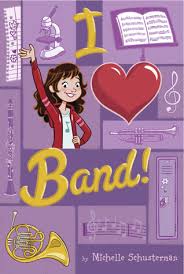
It’s time for another Bookanista recommendation: Michelle Schusterman’s delightful new MG series, I Heart Band.
index
Here’s the Book 1 back cover copy from the publisher:

Band Geeks unite in this fresh new middle-grade series by debut author (and former band director) Michelle Schusterman!

Holly Mead’s first day of seventh grade isn’t going as planned. Her brother ruins her carefully chosen outfit, she’s almost late, and her new band director has some surprisingly strict rules. Worst of all, it seems like her best friend, Julia, has replaced her with Natasha, the pretty, smart, new French horn player! Holly is determined to get first chair, but Natasha is turning out to be some pretty stiff competition—and not just in band. Band might be a competition, but friendship isn’t—and Holly needs to figure it out before she loses Julia for good.

First things first: I ♥ I HEART BAND!

(And now second thing second, which is a disclaimer: I’m about as biased as you can get about this series because not only am I employed by the publisher, but the author is a friend. That said, this post is solely my opinion, and my enthusiasm for these books would be just as strong even if I weren’t professionally/personally involved in their publication.)

imagesI love what this series features: friendship, community, and creativity. Oh, and French horns, which I played in my middle-school band (oh, the memories!) In addition to being hilarious and heartfelt (and containing an ideal amount of pitch-perfect MG crush and friend drama), this series admirably celebrates music education, which is disappearing from far too many schools.

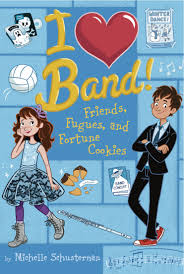
Both Book 1 and Book 2 (Friends, Fugues, and Fortune Cookies) are available today!

See what my fellow Bookanistas are recommending today:

My Word for 2014

Last year, my word for 2013 was balance. While I do think that having that word at the forefront of my mind helped me take at least a few steps toward a more balanced life, I still have a lot of work to do with that word. But 2014 is a new year, so I needed a new word.

For 2014, I’m choosing: open.

As I look back over my 2013 posts, I realize that I didn’t blog much about what’s been going on in my writing life. That’s partly because after starting a new job last January, I found I had a lot less time for blogging and social media in general (sad face). But honestly, I think it’s also that as I moved further into the publishing process, the more I found myself retreating a bit, at least online. Working toward publishing When Audrey Met Alice has been a joyful experience, by and large–but like any big life thing, it’s brought some stressors along with the good stuff. I found myself nervous about sharing both the many good things (I guess I have that Midwestern sensibility of not tooting one’s own horn) and the few things that scared me. The thing I’m starting to realize, though, is that writing with a goal of publication means putting yourself out there in the world, and that’s an okay thing. You have to be open to the possibilities. And I truly believe that the best writing comes from an open mind and an open heart, and I want to keep improving my craft this year.

Perhaps because I often felt overwhelmed by juggling day-job work, writing work, a move, and everything else last year, I found myself closing off a little in other ways. Sometimes I met invitations and opportunities with a cringe (Where am I going to find the time for that!) instead of an excited or appreciative smile. Sometimes I just got really anxious, or exhausted-cranky. I’d like to shift that attitude a bit, and show thankfulness for all of the great things in my life by approaching it by being a little more receptive.

I’ve never been super comfortable with sharing too much personal stuff online (hello, introversion), and I don’t think that’s going to change. But I feel such gratitude for all the honest posts I’ve read from writers at various stages of the publishing process the past two weeks. So in addition to trying to approach IRL things with a spirit of openness, I want to approach online life with a bit more of that, too. Like by saying right now that as excited as I am for my book to come out in less than a month(!), I’m pretty nervous, too.

So, hello, 2014. I am taking deep breath and doing a stretchy yoga move, and trying to greet everything that’s in store for me this year with . . . openness.

(What’s your word for this new year?)

Guest Post: MG Author Jordan Jacobs

Today I’m excited to host Jordan Jacobs, author of the MG mystery Samantha Sutton and the Labyrinth of Lies, for a guest post. Samantha Sutton features a whipsmart and adventurous heroine, a realistic sibling relationship, lots of action and adventure, and loads of very cool archeology factoids. Jordan Jacobs really does have my childhood dream job: an archaeologist who write novels on the side. When he’s not writing the Samantha Sutton series, what is his archaeology work like? I pictured something straight out of the Indiana Jones ride at Disneyland. Read on to find out what an archaeologist really does.


Just Another Day at the Office
Jordan Jacobs

The movies don’t get everything wrong when it comes to archaeology. Even in real life, there’s plenty of adventure to be found.

As an archaeologist, I’ve gotten to work high in the Andes at Chavin de Huantar—crawling through unexplored tunnels full of bats and rubble and scattered human bones. I’ve excavated Crustumerium, just north of Rome, where Bronze Age peoples lie at rest in a sprawling city of the dead. I’ve worked in the United States as well, clearing cemeteries in advance of major construction projects, excavating cliff dwellings, and digging the toilet of a California governor from the wreckage of his earthquake-totalled mansion.

But of course, this sort of adventure is only part of the job.

An archaeologist’s task is to study past cultures through what they’ve left behind. These pieces of evidence—or “artifacts”—can be as big as an Egyptian pyramid or as small as a speck of pollen, stuck to an ancient cooking pot. But the information they contain can be surprising. Archaeologists can use these artifacts to reconstruct how people once lived—from the food they ate, to the way they fought, to the religions that they practiced and their views of the world around them.

The archaeologist’s “typical day” takes a variety of forms. Some work mostly in the field–surveying the land, digging precise excavation units into the earth, looking for patterns, making comparisons, and drawing careful conclusions from whatever pieces of the past still remain. Others work in laboratories, using the tools of science to discover how old an object is, exactly what it’s made of, or precisely where it came from. Still others spend their days in museum storerooms, re-examining the evidence recovered by their predecessors. And some archaeologists work with governments and companies in order to protect sites from destruction through development, looting, neglect, or war.

But archaeology also carries a lot of responsibility. One awkward truth is that excavation destroys sites, meaning that each particular discovery can be made only once. It’s up to the archaeologist to record everything he or she can–otherwise, that information is lost forever. Just as importantly, archaeologists have a responsibility to the people who live nearby the site, or who claim it as their ancestors’.

At its best, archaeology is a little like time travel. Holding an artifact in your hand can make you feel a connection to someone who lived centuries or millennia before. It’s intimate. It’s humbling. Seeing the fingerprint of a potter on the surface of a plain and broken pot is a reminder of the humanity all people share–no matter where, or when, we live.

*Full disclosure: I share a publisher, Sourcebooks Jabberwocky, with Jordan Jacobs. I purchased my own copy of Samantha Sutton, however, and any opinions are my own.*

Archives